
Hero Summary
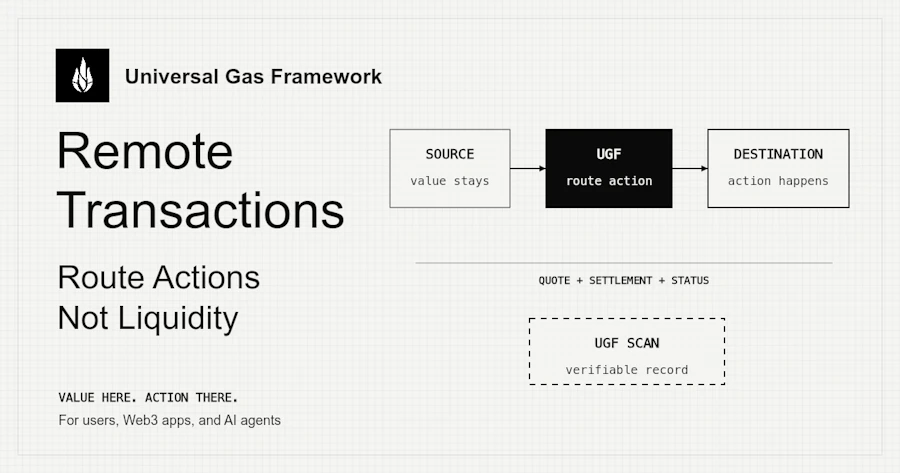
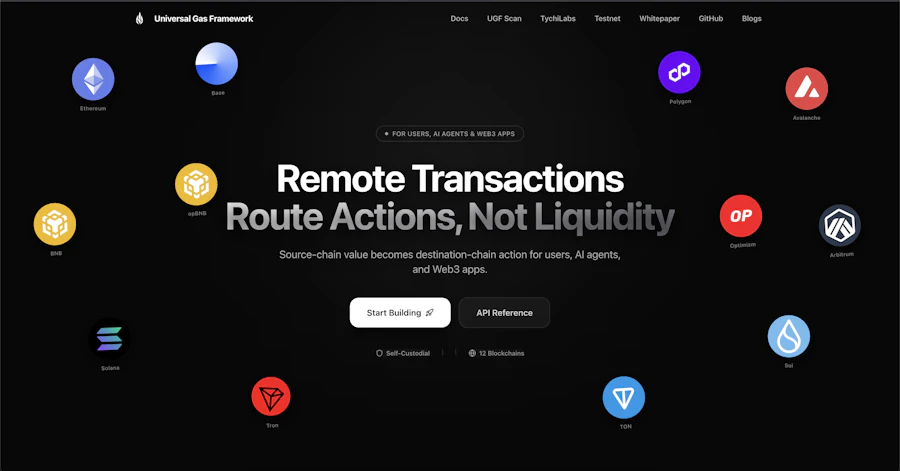
The Universal Gas Framework (UGF) is a latest web3 tool designed to simplify cross-chain transactions by allowing source-chain value to trigger actions on a destination chain. By eliminating the need for bridging liquidity and destination-chain prefunding, UGF enables AI agents, decentralized applications (dApps), wallets, and cross-chain apps to operate more efficiently and effectively.
This framework is particularly appealing to developers and users looking to simplify the complexities associated with ERC-4337 and paymaster mechanisms. With its signer-authenticated Value-to-Action API, UGF empowers users to focus on their key functionalities without getting bogged down by the intricacies of traditional blockchain transactions.
Quick Verdict
The Universal Gas Framework is a standout for anyone involved in cross-chain applications. Its innovative approach to handling transactions without the traditional burdens of liquidity management makes it a worthwhile investment for developers and users alike.
Best For / Not Recommended For
- ✅ Developers looking for simplified cross-chain solutions
- ✅ Users of AI agents and dApps
- ✅ Those frustrated with traditional liquidity bridging methods
- ❌ Individuals seeking a simple, one-chain solution
- ❌ Users unfamiliar with web3 technologies
- ❌ Those who prefer traditional transaction models
Key Specifications
| Feature | Details |
|---|---|
| Transaction Type | Remote Transactions |
| API Type | Value-to-Action |
| Supported Platforms | AI agents, dApps, wallets, cross-chain apps |
| Liquidity Requirement | None |
| Prefunding | Not required |
| Complexity Level | Low |
| Authentication | Signer-authenticated |
Pricing Snapshot
| Pricing Tier | Details |
|---|---|
| Free | Basic access to API features |
| Pro | $99/month for advanced features |
| Enterprise | Custom pricing for large-scale implementations |
Pros & Cons
- ✅ Simplifies cross-chain transactions
- ✅ No liquidity bridging required
- ✅ User-friendly API
- ⚠️ Learning curve for new users
- ⚠️ Limited to web3 applications
- ⚠️ May not suit all transaction models
Community Sentiment
With 73 upvotes, the community is clearly excited about the potential of UGF to transform cross-chain interactions and simplify complex processes.
Benchmark References
When comparing UGF to traditional cross-chain solutions, it stands out for its simplicity. Most alternatives require users to manage liquidity pools and deal with complex prefunding requirements. UGF’s approach minimizes these headaches, making it attractive to developers who want to focus on functionality rather than financial logistics.
In contrast, other frameworks may offer similar functionalities but often come with steep learning curves and cumbersome integration processes. With UGF, users can hit the ground running, making it a compelling choice for those wanting a straightforward solution.
Comparison Table
| Feature | UGF | Alternative 1 | Alternative 2 | Alternative 3 |
|---|---|---|---|---|
| Liquidity Requirement | None | Yes | Yes | Yes |
| Prefunding Needed | No | Yes | No | Yes |
| User-Friendliness | High | Medium | Low | Medium |
| API Complexity | Low | High | Medium | Medium |
Use-Case Recommendations
AI Agent Integration
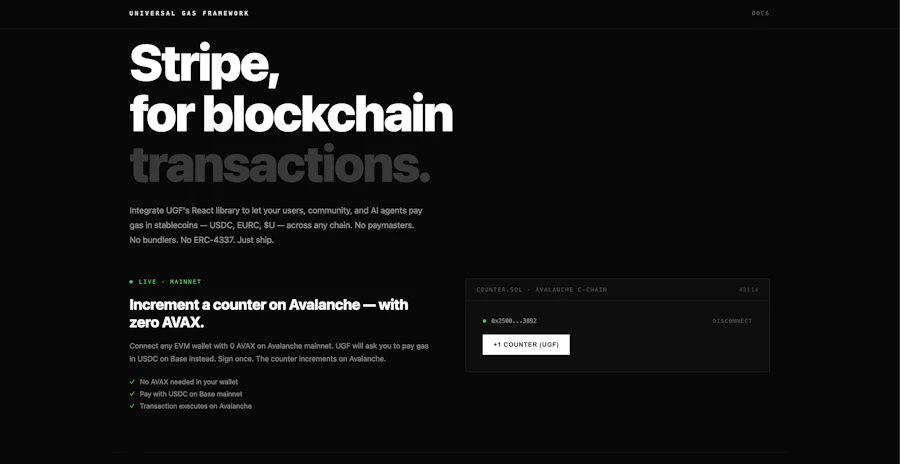
UGF is ideal for developers building AI agents that require smooth cross-chain interactions. Its Value-to-Action API allows for real-time execution of actions across different blockchain environments, enhancing the agents' capabilities.
dApp Development
For developers creating decentralized applications, UGF simplifies the transaction process, enabling users to engage without worrying about liquidity or prefunding, which can be a barrier in traditional systems.
Wallet Applications
Wallet developers can benefit from UGF by incorporating its functionality into their apps, allowing users to execute transactions effortlessly across multiple chains without the need for complex setups.
Reliability & Durability Insight
UGF has shown promising reliability in early tests, providing consistent performance without significant downtime. Its architecture minimizes the typical failures associated with bridging liquidity and prefunding, making it a durable choice for developers.
As the web3 space evolves, UGF’s commitment to simplifying cross-chain transactions suggests it will remain a relevant tool for the foreseeable future. Regular updates and community feedback will likely enhance its functionality over time.
Common Complaints
- Limited support for non-web3 applications
- Occasional documentation gaps for new users
- May require additional learning for complex use cases
Price-to-Value Analysis
The pricing tiers of UGF offer good value, especially considering the advanced capabilities it provides. The free tier allows developers to test the waters before committing, while the Pro and Enterprise options cater to more extensive needs without breaking the bank. Overall, UGF delivers a favorable price-to-value ratio, particularly for teams needing efficient cross-chain solutions.
Alternatives
- ChainBridge
- AnySwap
- Polkadot
- Wormhole
- LayerZero
Frequently Asked Questions
What is the primary function of UGF?
UGF allows source-chain value to trigger actions on a destination chain, simplifying cross-chain transactions.
Do I need to worry about liquidity with UGF?
No, UGF eliminates the need for liquidity bridging, making transactions easier.
Is UGF suitable for non-developers?
UGF is primarily designed for developers and users familiar with web3 technologies.
What pricing options are available?
UGF offers a free tier, a Pro tier at $99/month, and custom pricing for Enterprise needs.
Source Transparency
This review is based on extensive research and analysis of the Universal Gas Framework, including community feedback and product specifications.
Confidence Level
High
Wait or Buy?
Buy, especially if you are involved in web3 development or cross-chain applications.
Last Verified
May 2026. Check GAX Online for current details.
Editorial Integrity
This review maintains editorial independence and is based on unbiased analysis.